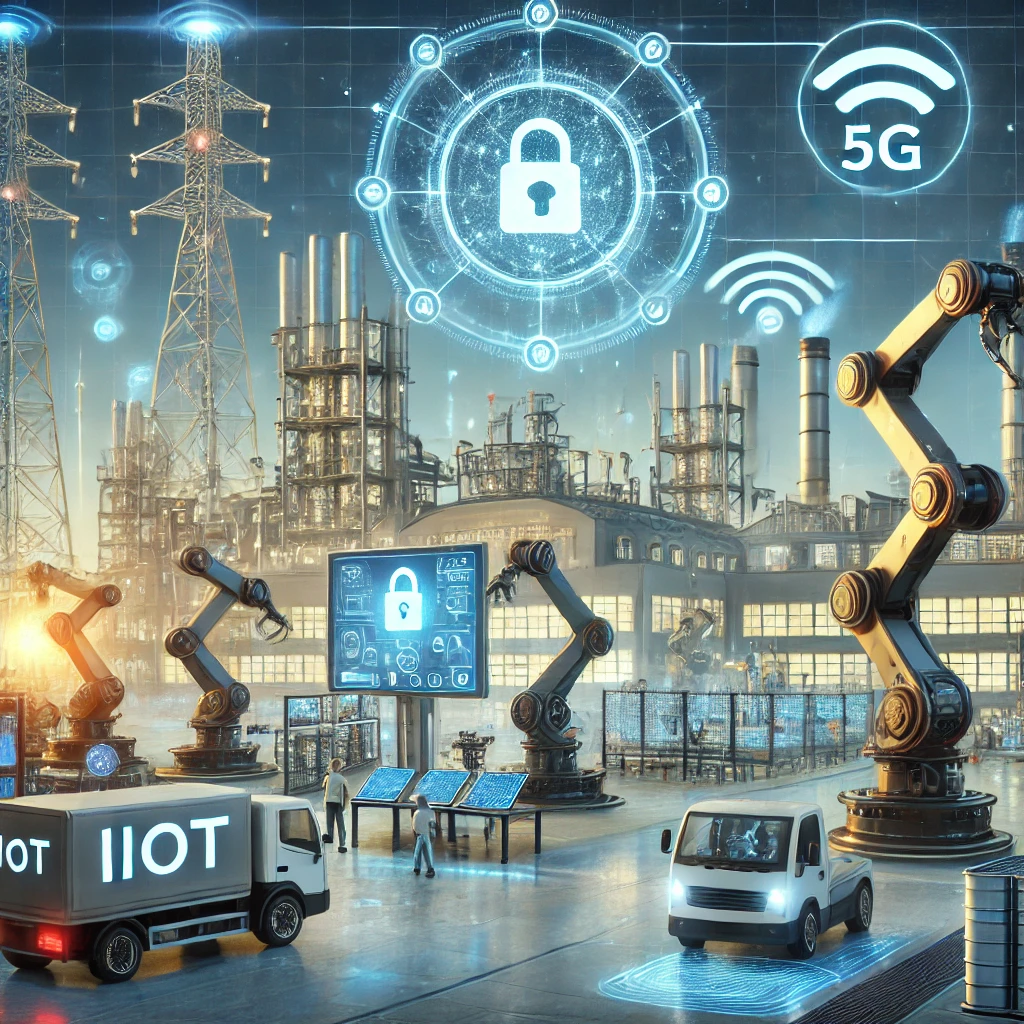
Rise of AI-Driven IIoT
Artificial Intelligence (AI) and Machine Learning (ML) will continue to play a crucial role in IIoT by enabling predictive maintenance, anomaly detection, and real-time decision-making. AI-powered IIoT systems will analyze vast amounts of data to optimize operations, reducing downtime and increasing productivity.
5G and Edge Computing Integration
The expansion of 5G networks will provide ultra-low latency and high-speed data transmission, allowing IIoT devices to communicate more efficiently. Coupled with edge computing, where data is processed closer to the source, industries will experience faster response times, improved security, and reduced cloud dependency.
Enhanced Cybersecurity Measures
As IIoT adoption increases, so do cybersecurity risks. In 2025, we can expect stricter regulations, improved encryption methods, and AI-driven threat detection systems to protect industrial networks from cyber threats and ensure secure data transmission.
Interoperability and Standardization
A major challenge in IIoT has been the lack of standardization across devices and platforms. Industry leaders are working towards unified protocols and open standards that will facilitate seamless communication between different IIoT ecosystems, leading to improved efficiency and collaboration.
Digital Twins for Real-Time Simulation
Digital twins—virtual models of physical assets—will see wider adoption in 2025. By replicating industrial processes in real-time, digital twins will help businesses monitor performance, run simulations, and optimize production, ultimately reducing costs and improving product quality.
Sustainability and Green IIoT
With the growing focus on sustainability, IIoT solutions will contribute to energy efficiency, waste reduction, and sustainable manufacturing practices. Smart sensors and automation will enable companies to track carbon footprints, optimize energy usage, and minimize resource wastage.
Autonomous Industrial Systems
Advancements in robotics and automation will lead to more autonomous industrial operations. Self-optimizing machines and AI-driven supply chains will reduce human intervention, improving safety and operational efficiency across industries.
Final Thoughts
The future of IIoT in 2025 is promising, with rapid advancements in AI, 5G, edge computing, and cybersecurity paving the way for smarter, more efficient industrial operations. Businesses that embrace these technologies will gain a competitive edge, improving productivity, reducing costs, and driving innovation.
Are you ready for the next wave of IIoT transformation? Stay ahead by investing in the right technologies and strategies today!